

What Is Pogo Sticking in SEO and How Does It Work

Pogo sticking happens when someone clicks on your search result, quickly returns to Google, then clicks on another result. This bouncing behavior signals to search engines that your page didn’t satisfy what the searcher wanted. It’s different from bounce rate because the user actively chooses a competitor’s result instead.
Think about the last time you searched for something important. You clicked the first result. The page took forever to load, or maybe the content wasn’t what you expected. Frustrated, you hit the back button and tried the next link. That’s pogo sticking in action.
Why Search Engines Care About This Signal
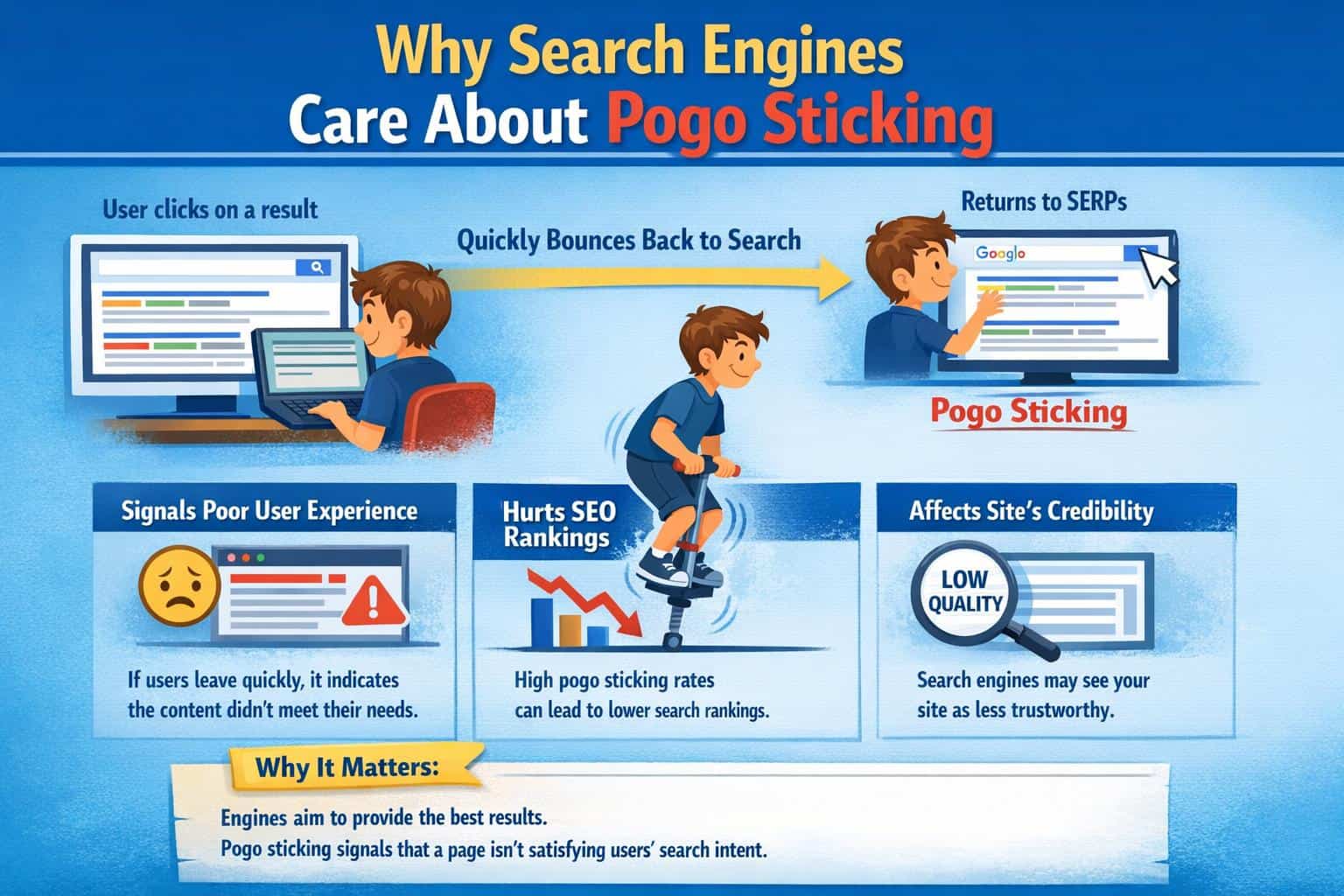
Google’s algorithm treats pogo sticking as a red flag. The behavior pattern tells a clear story: users aren’t finding what they need on your page.
When multiple people pogo stick from your site, it creates a negative feedback loop. Search engines notice these patterns. They adjust rankings accordingly. Your position drops. Fewer people find your content.
The impact varies by query type. Informational searches see the strongest effects. If someone searches “how to fix a leaky faucet” and immediately bounces to try another result, that’s a powerful negative signal. Navigational searches matter less since users already know their destination.
The Psychology Behind User Bouncing
People make snap judgments about web pages. Research shows visitors form opinions within 50 milliseconds of landing on a site. That’s faster than you can blink.
Several triggers cause immediate abandonment:
Page load speed exceeding three seconds loses half your visitors. Nobody waits anymore. Mobile users are even less patient.
Misleading titles create instant distrust. If your headline promises “5 minute solution” but the content requires an hour, people leave angry.
Wall-of-text layouts overwhelm readers. Our brains seek visual breaks. Dense paragraphs feel like homework.
Intrusive popups before users can evaluate content spark rage-clicking that back button. You’ve lost them before they started.
How Pogo Sticking Differs From Bounce Rate

Many SEO professionals confuse these metrics. They’re related but fundamentally different measurements.
Bounce rate tracks single-page sessions. Someone visits, reads your entire article, finds their answer, and leaves satisfied. That’s still a bounce. But it’s not necessarily bad.
Pogo sticking specifically measures return-to-SERP behavior. The user explicitly rejects your content in favor of alternatives. This direct comparison makes it more damaging to rankings.
Time spent matters here. A two-minute read followed by leaving differs vastly from a three-second glance and retreat. Search engines can distinguish between satisfied exits and disappointed escapes.
Measuring Pogo Stick Rate on Your Site
Traditional analytics tools don’t directly report pogo sticking. But you can identify warning signs through creative analysis.
Start with pages showing high bounce rates combined with low average session duration. Under 30 seconds typically indicates problems. Compare this against your site average.
Check Google Search Console for dropping positions on previously strong pages. Sudden declines often correlate with pogo sticking issues.
Monitor scroll depth alongside time metrics. Users who don’t scroll past 25% before leaving are classic pogo stickers.
Set up return visitor tracking. If people rarely come back to specific pages, even through different search queries, you’ve identified problem content.
Content Strategies to Reduce Pogo Sticking
Your opening paragraph determines success or failure. Answer the searcher’s core question immediately. Save elaboration for later.
Structure content for scanners. Use descriptive headings every 200-300 words. Bold key points. Create visual hierarchy that guides eyes downward.
Match search intent precisely. Someone searching “iPhone 15 price” wants numbers, not a history of Apple. Deliver what they came for first.
Add a table of contents for longer pieces. Let visitors jump to relevant sections. Respect their time.
Include multimedia elements strategically. Videos, infographics, and charts break up text while adding value. But don’t overdo it. Each element should earn its placement.
Write naturally. Keyword stuffing feels robotic and drives people away. Focus on helpful, conversational explanations.
Technical Fixes That Keep Visitors Engaged
Speed optimization isn’t optional anymore. Compress images. Minimize JavaScript. Use lazy loading. Every millisecond counts.
Mobile responsiveness affects over 60% of searches. Test your pages on actual phones, not just browser tools. Real devices reveal real problems.
Fix broken internal links immediately. Nothing frustrates users more than clicking to nowhere.
Ensure font sizes remain readable. 16px minimum for body text. Larger for mobile. Tiny text causes instant abandonment.
Remove aggressive interstitials. That newsletter popup can wait until users actually engage with your content.
Implement smooth scrolling and clear navigation. Users should never feel lost or struggle to find information.
The Long-Term Impact on Rankings
Pogo sticking creates cumulative damage over time. Initial ranking drops might seem minor. But continued poor user signals compound the problem.
Google’s RankBrain specifically analyzes user satisfaction signals. Pages with persistent pogo sticking issues face algorithmic suppression. Recovery becomes increasingly difficult.
Your domain authority suffers too. Search engines lose confidence in your ability to satisfy queries. Even new content starts at a disadvantage.
Competitor sites benefit from your losses. When users pogo stick from you to them, it boosts their relevance signals. They climb while you fall.
Building Trust From the First Second
Trust begins with accurate meta descriptions. Don’t oversell or mislead. Set proper expectations for what visitors will find.
Your page should load with the promised content immediately visible. No massive headers pushing everything below the fold. No surprise video autoplays.
Author information and publication dates build credibility. Readers want to know who wrote this and when. Outdated content triggers immediate departures.
Professional design matters more than you think. Cluttered layouts, stock photos, and aggressive ads scream “untrustworthy” to modern users.
When Pogo Sticking Actually Helps You
Sometimes bouncing behavior provides valuable feedback. It highlights content gaps you hadn’t noticed.
High pogo stick rates on commercial pages might indicate pricing issues or missing product information. The behavior becomes diagnostic.
Analyze which competitors users choose after leaving. Study their content. Identify what they’re doing better. Learn from your losses.
Use pogo-sticking data to guide content updates. Pages with improving dwell time after revisions confirm you’re moving in the right direction.
The Future of User Signals in SEO
Machine learning algorithms grow more sophisticated at interpreting user behavior. Pogo sticking represents just one signal among hundreds.
Voice search and AI assistants add new complexity. How will search engines measure satisfaction when users never visit pages directly?
Zero-click searches already impact traffic patterns. Featured snippets satisfy queries without clicks. Pogo sticking metrics must evolve accordingly.
Privacy regulations might limit behavioral tracking. Search engines need alternative quality signals. Content quality becomes even more critical.
Taking Action on Your Own Site
Start by auditing your worst-performing pages. Look for patterns in user behavior. Do certain topics consistently underperform?
Test different content formats. Some topics work better as videos. Others need detailed written guides. Match format to user preference.
Create feedback mechanisms. Simple “was this helpful?” buttons provide direct insight into satisfaction levels.
Monitor competitors religiously. When they outrank you, study why. When you win, understand what worked.
Remember that fixing pogo sticking takes time. User signals accumulate slowly. Stay patient but persistent. Small improvements compound into significant gains.
Quality content that genuinely helps people remains the ultimate solution. When you solve real problems effectively, users stay, engage, and return. Search engines notice. Rankings follow naturally.


