

Best AI Avatar Generators in 2026

AI avatar generators have moved from novelty to everyday production tools. Teams now build training, onboarding, product explainers and marketing videos from a script, with no camera, actor or studio.
The catch is that the tools vary widely. Some are built for enterprise training and governance, others for talking-photo clips, quick ads or personalized outreach. To compare them we weighed avatar realism, languages, consent and compliance, workflow features and how well each fits professional and technical content. Here is how the leading options stack up, the few we would skip for this purpose and the one we would choose.
Comparison at a glance
| Tool | Best for | Personal avatar from a photo | Free tier | Notable strength |
| Synthesia | Enterprise training and technical content | Yes, from a single photo | Limited plan | 240+ stock avatars, Veo 3 customizable avatars, consent and SOC 2 Type II |
| Colossyan | Interactive learning and compliance training | Yes, on higher tiers | Free trial | Branching scenarios, in-video quizzes, LMS export |
| D-ID | Talking-photo videos from a single image | Yes | Watermarked free tier | Low cost, strong API for automation |
| Elai.io | Turning documents and slides into videos | Yes | Free trial | Simple doc-to-video workflow |
| DeepBrain AI Studios | Fast, presenter-led text-to-video | Yes | Free to start | Real-time generation, teleprompter, script help |
| Vidnoz | Budget marketing and course videos | Yes, from an image | Generous free tier | Large avatar library, low entry price |
| Tavus | Personalized one-to-one video at scale | Yes, a digital twin | API trial | Personalization API for outreach |
Figures are approximate and move fast, so confirm current plans and features on each vendor site before you commit.
The best AI avatar generators, ranked
1. Synthesia
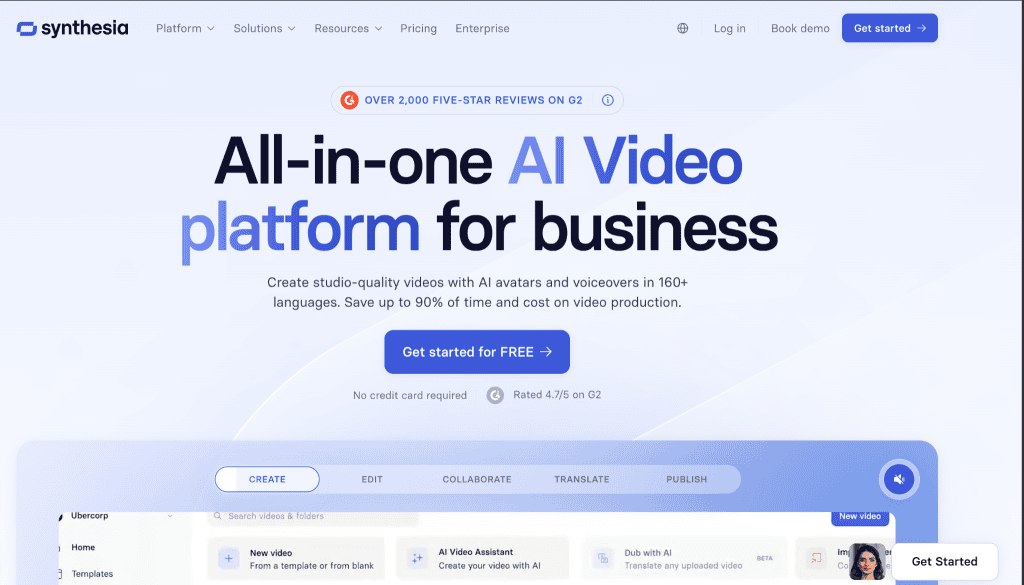
For business and technical content, Synthesia is our top pick, because it pairs realistic avatars with the governance and workflow that serious teams need.
It offers three avatar types for different jobs. Stock Avatars give you a diverse library of 240 or more ready-made, full-body avatars with natural gestures and expressions. You get accurate lip-sync and voices that convey emotion and intent straight out of the box, so you can start your first video instantly with no filming, consent process or configuration needed.
Customizable Avatars let you generate an avatar for any scene or setting. You describe the outfit, setting and on-screen actions in natural language and Veo 3 generates the scene, creating dynamic, on-brand visuals without filming or manual editing.
Personal Avatars turn you into an AI avatar from a single photo, with optional voice cloning, so every video looks and sounds like you without being on camera. You keep your presence, delivery and tone consistent across training, comms, marketing and sales without additional filming.
Beyond the avatars, Synthesia is built for teams. It supports one-click translation into many languages, an AI screen recorder that turns captures into editable scripts, plus analytics to see where viewers drop off.
For compliance it runs a trust and safety layer with consent capture for personal avatars and content moderation limited to professional business use, plus SOC 2 Type II. That mix of realism, control and governance is why it leads for technical and enterprise content.
2. Colossyan
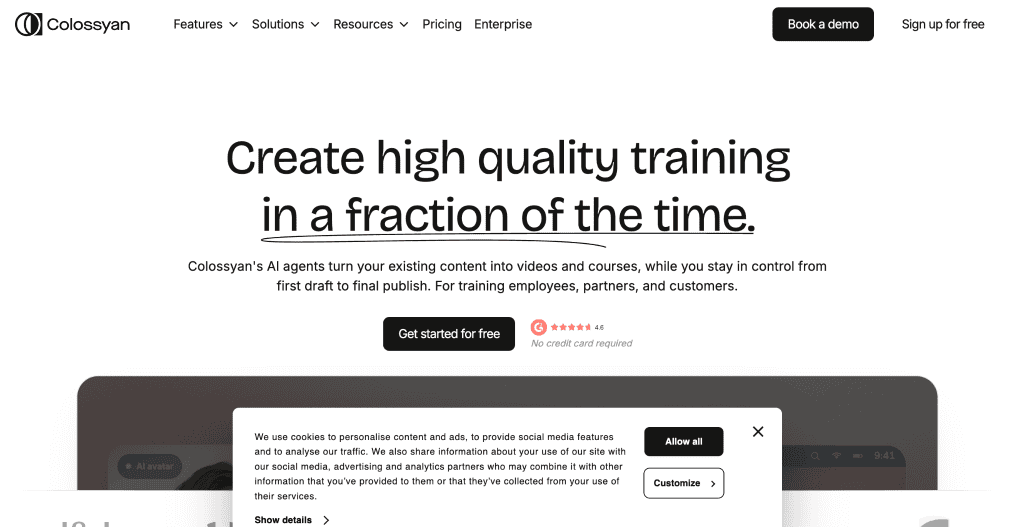
Colossyan is built specifically for workplace learning, so it fits teams turning documents, decks and scripts into structured training.
It stands out for interactive features that most avatar tools lack, including branching scenarios where viewers choose a path and in-video quizzes that report completion back to your LMS.
With a curated avatar library and automatic translation across dozens of languages, it is a strong pick for learning teams and compliance content.
3. D-ID
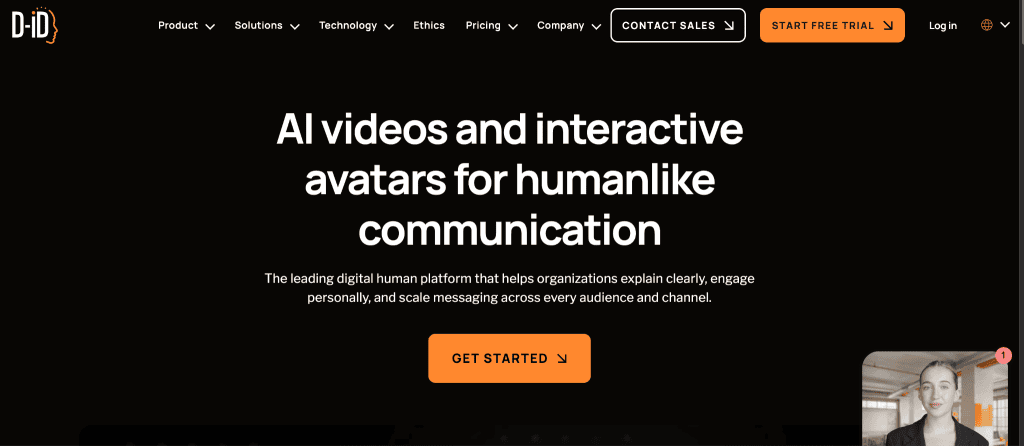
D-ID is best known for turning a single photo into a talking avatar, which makes it the go-to for animating a headshot or still image.
It is one of the lower-cost paid options and offers one of the strongest APIs in the category, so it suits developers wiring avatars into an automated pipeline. Realism on stock presenters is more modest than the enterprise platforms, and its free tier adds a watermark.
4. Elai.io
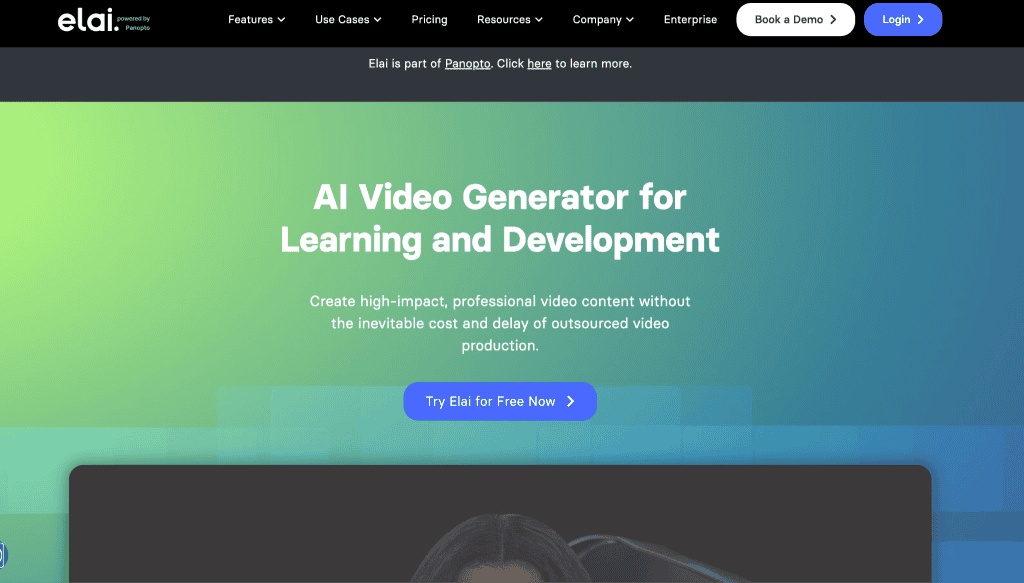
Elai.io focuses on turning documents and slides into avatar videos, which suits training, onboarding and internal communication.
The interface is clean and easy for non-video teams, favoring clarity and repeatability over expressive motion. It is a reasonable budget option when you want reliable presenter videos without deep interactivity.
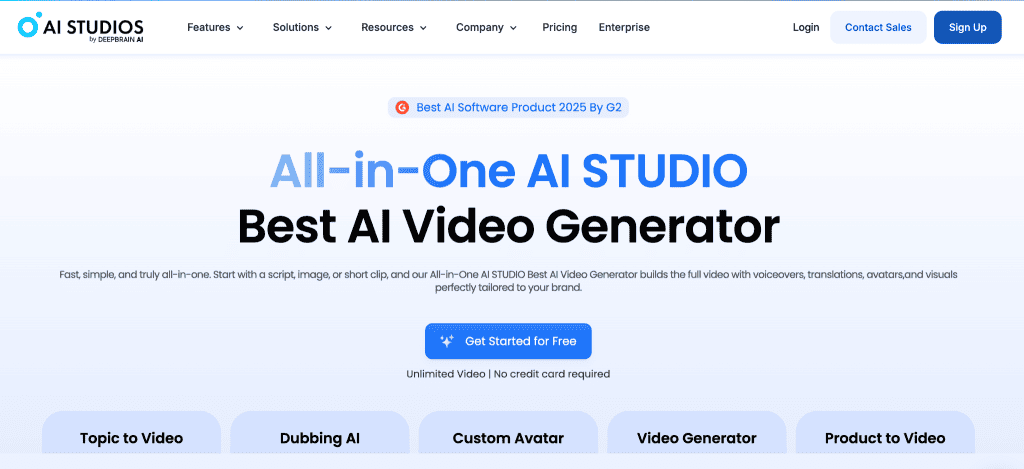
5. DeepBrain AI Studios
AI Studios by DeepBrain AI emphasizes fast production of presenter-led videos from text, with real-time generation that suits news-style updates and announcements.
A teleprompter mode and built-in script help move teams from idea to video quickly. It is a practical choice when turnaround speed matters more than the most lifelike output.
6. Vidnoz
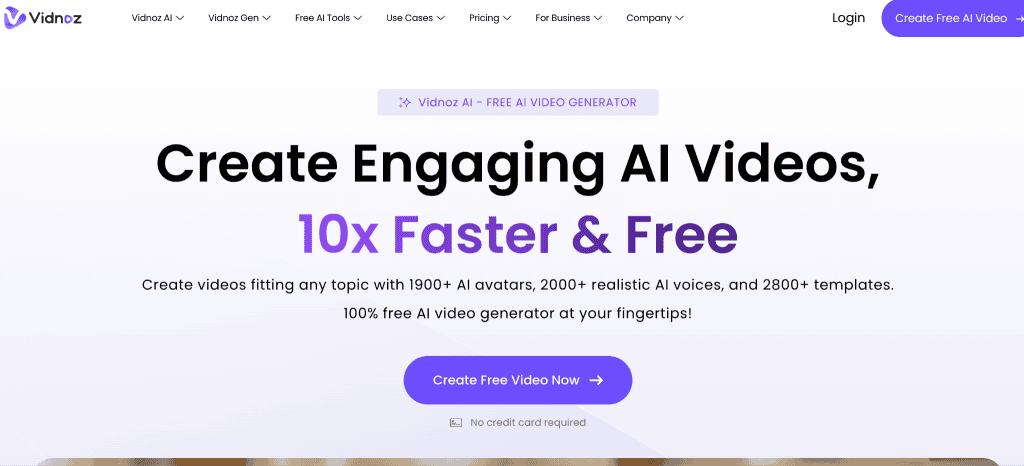
Vidnoz creates avatar videos from images and is known for one of the most generous free tiers in the category, which appeals to small businesses and educators.
It leans toward marketing, slideshow and course-style videos, with a large avatar library and low entry pricing. The free tier caps daily minutes and adds a watermark, and advanced editing is lighter than the enterprise tools.
7. Tavus
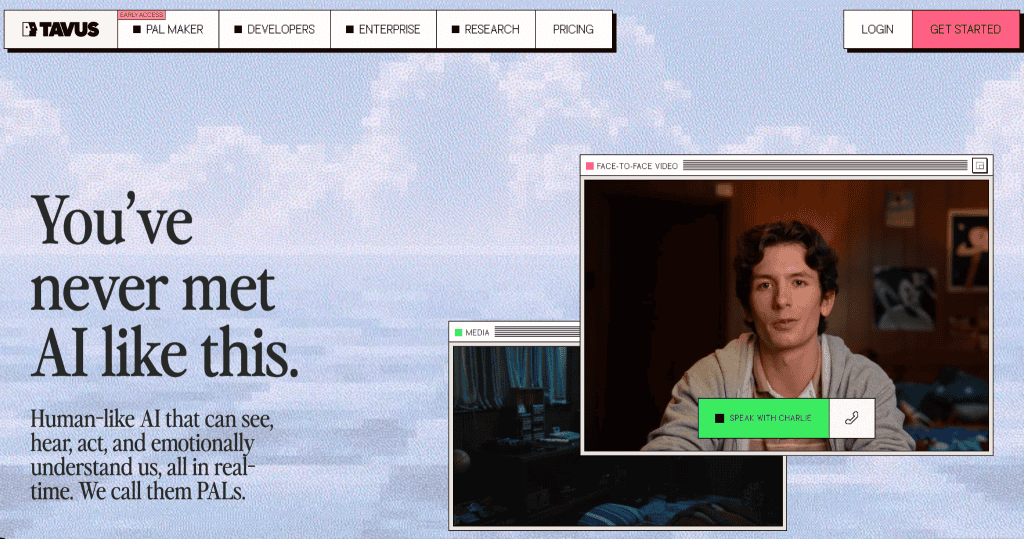
Tavus specializes in personalized one-to-one video at scale, creating a digital replica that can address each viewer individually. Its API is built for generating large volumes of tailored videos, which fits personalized sales and outreach rather than a shared content library.
Consider it when the goal is individualized video rather than a reusable training set.
AI avatar generators we don’t recommend
The field is crowded with general AI tools, but these three are built for a different job than professional, script-driven avatar video. They are not bad tools, just the wrong fit for training and technical content.
Avatarify
Avatarify animates a photo in real time by mirroring your own facial movements, so it is aimed at live streaming and video calls, not scripted production. It has no avatar library, script workflow, consent controls or team features, which rules it out for professional training content.
Fotor
Fotor makes stylized static avatar images, such as cartoon, anime and 3D profile pictures, rather than talking-avatar videos. It is handy for a social profile picture, but it does not produce narrated, script-driven video, so it does not fit this use case.
Pictory
Pictory is built to turn blog posts and long text into videos assembled mostly from stock footage, not avatar-led explainers. Its presenter capabilities are limited next to dedicated platforms, so it is a weak fit when a consistent on-screen presenter is the point.
The best AI avatar generator
Synthesia is our overall winner for professional and technical content, thanks to its realistic avatars, translation, screen recorder and enterprise governance.
The best alternative depends on the job. Choose Colossyan for interactive quizzes and branching, D-ID for talking-photo videos or a low-cost API, DeepBrain AI Studios for fast presenter videos, Vidnoz for free volume and Tavus for personalized one-to-one video.
Match the tool to the outcome you need, then confirm current plans before you buy.
Frequently asked questions
What is an AI avatar generator?
An AI avatar generator turns a script or audio into a video of a digital presenter that lip-syncs to your words, so you can produce explainers, training and marketing videos without a camera, actor or studio.
What is the best AI avatar generator for business and training?
For structured business and technical content, Synthesia is our top pick thanks to its realistic avatars, translation, screen recorder and enterprise governance. Colossyan is a strong alternative when you need interactive quizzes and branching.
Can I make an AI avatar of myself?
Yes. Several tools create a personal avatar from a photo or short video, and Synthesia builds one from a single photo with optional voice cloning, using a consent step to confirm identity.
Are AI avatar videos free?
Most platforms offer a free tier, but it usually adds a watermark and caps minutes. Vidnoz and D-ID are known for generous or low-cost entry points, while advanced features sit on paid plans.
Do I need to label AI-generated avatar videos?
Often yes. Platforms like YouTube require disclosure when AI meaningfully alters or generates realistic content, and the EU AI Act requires certain AI-generated content to be labeled, so add labeling to your publishing checklist.


